Written by Sunanda Purushottam Gupta
Insights from Leading Scandinavian Tech Organizations
Walk into a large IT company in Scandinavia, and the first thing you notice is not the technology.
It is the calm.
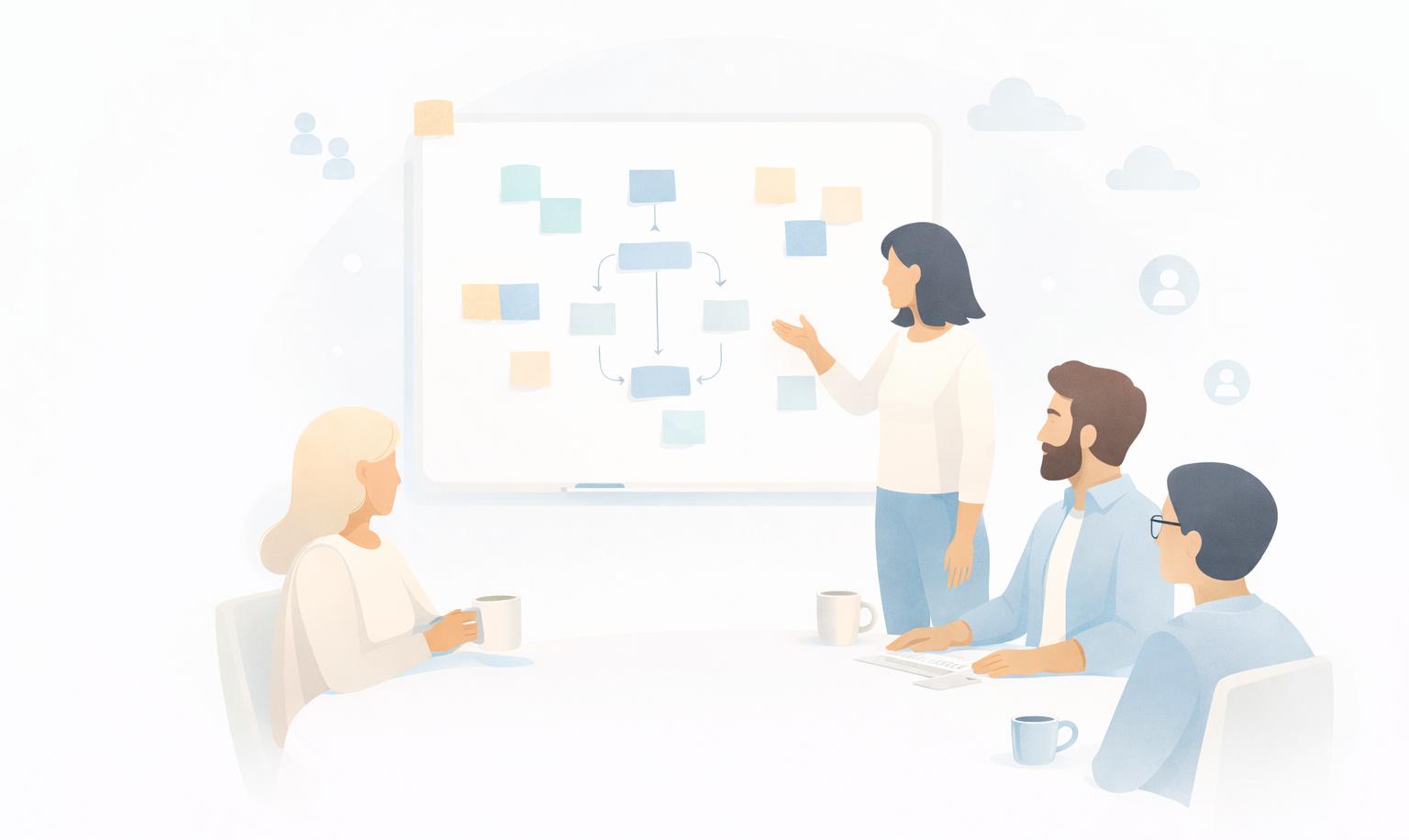
People discuss complex problems over coffee. Teams gather around whiteboards filled with half-finished ideas. Conversations move easily between business needs, user experience, and technical feasibility. There is structure, but no stiffness. There is ambition, but no panic.
Big IT companies do not succeed because they follow a perfect process.
They succeed because they have learned how to balance people, technology, and trust.
This balance is what keeps innovation moving forward.
 The Reality of the Work Flow
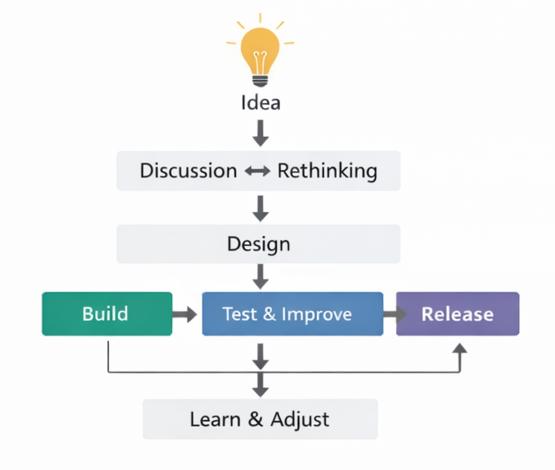
From the outside, software development is often imagined as a clean, linear journey.
In reality, it is intentionally imperfect.
Progress includes pauses, returns, and refinements. In mature IT organizations, this is not considered inefficiency. It is considered wisdom.
 Tools That Support, Not Control
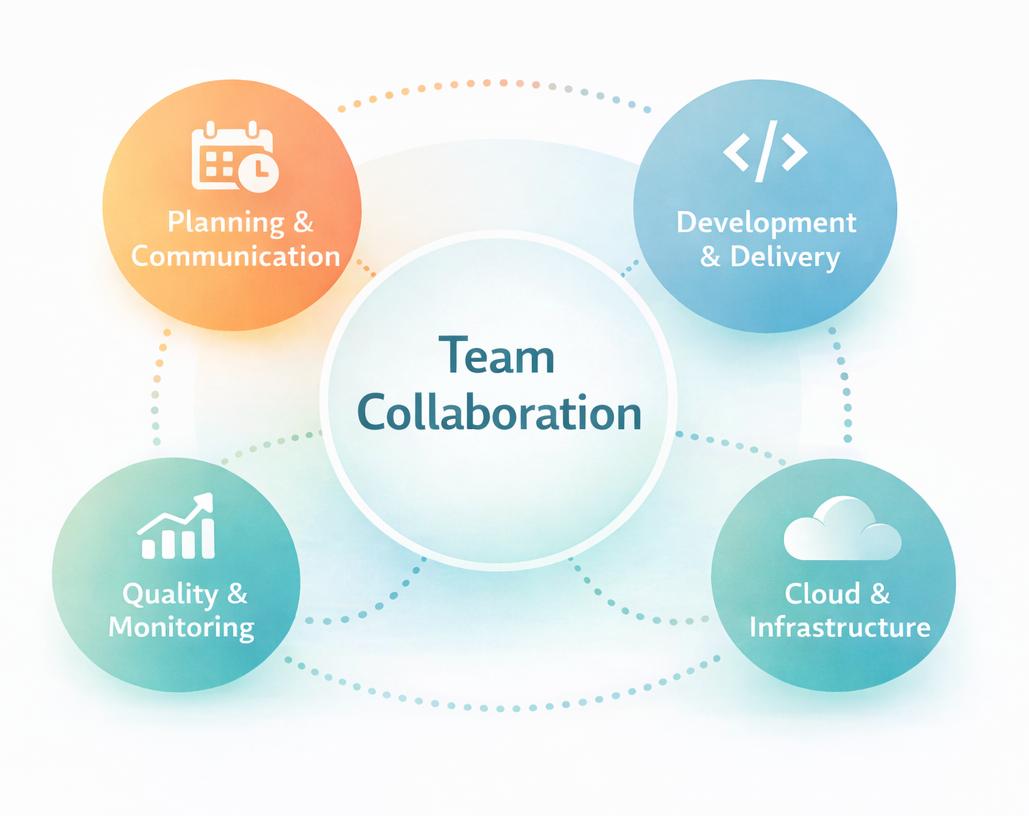
Across large Scandinavian IT companies, tool choices are surprisingly similar. Not because of trends, but because they enable transparency and collaboration.
Commonly Used Tools Category :
|
Planning and Collaboration |
Jira, Confluence, Slack, Microsoft Teams, Asana, Trello, Monday.com, ClickUp, Notion, Miro, MURAL, Figma, Zoom, Google Meet |
|
Development and Delivery |
GitHub, GitLab, Bitbucket, Azure DevOps, Jenkins, GitHub Actions, GitLab CI/CD, CircleCI, TeamCity, Docker, Kubernetes, Terraform, Nexus Repository, JFrog Artifactory |
|
Cloud and Infrastructure |
Microsoft Azure, Amazon Web Services (AWS), Google Cloud Platform (GCP), Cloudflare, Akamai, AWS Lambda, Azure Functions, Amazon S3, Azure Blob Storage, HashiCorp Vault |
|
Quality and Monitoring |
Selenium, Cypress, Playwright, Postman, SoapUI, Apache JMeter, Gatling, SonarQube, Sentry, Datadog, Prometheus, Grafana, Splunk, Google Analytics, Hotjar |
The key idea is simple.
Tools exist to support conversations, not replace them.
For readers interested in understanding how continuous delivery works in practice:
https://martinfowler.com/bliki/ContinuousDelivery.html
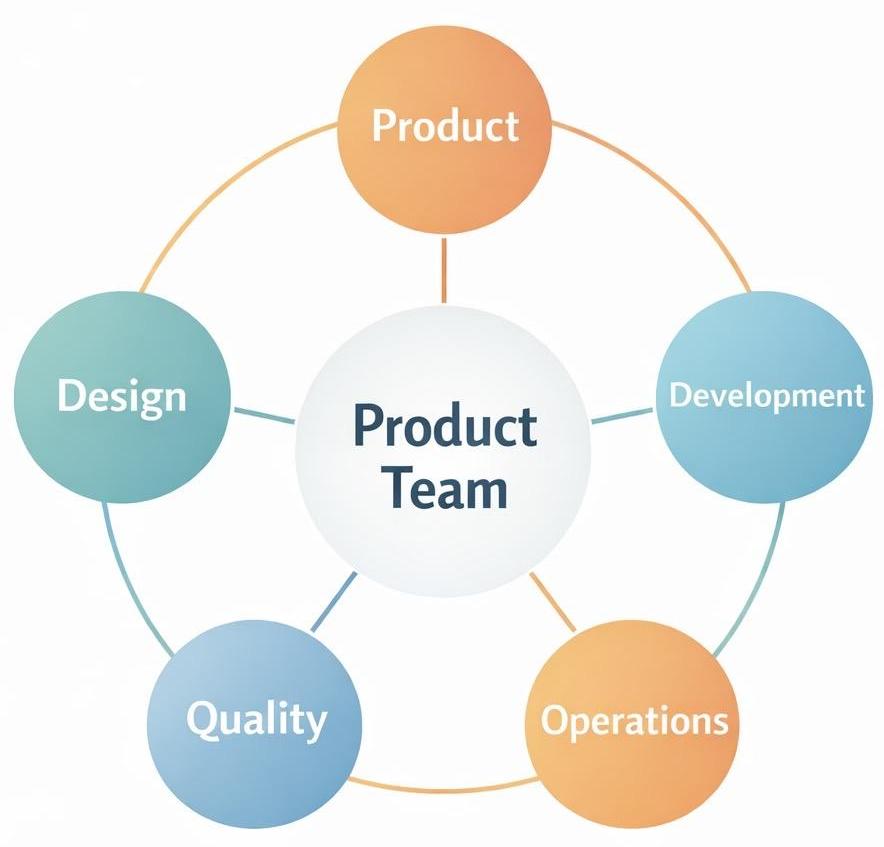 Collaboration Is the Real Architecture
Modern IT teams are cross-functional by design. A single team often includes:
- Product managers focusing on user and business needs
- Developers shaping the solution
- Testers and quality engineers ensuring reliability
- Designers improving usability and experience
- Platform or operations specialists keeping systems stable
Instead of passing work from one role to another, teams work together from the start. This approach reduces misunderstandings and creates shared ownership.
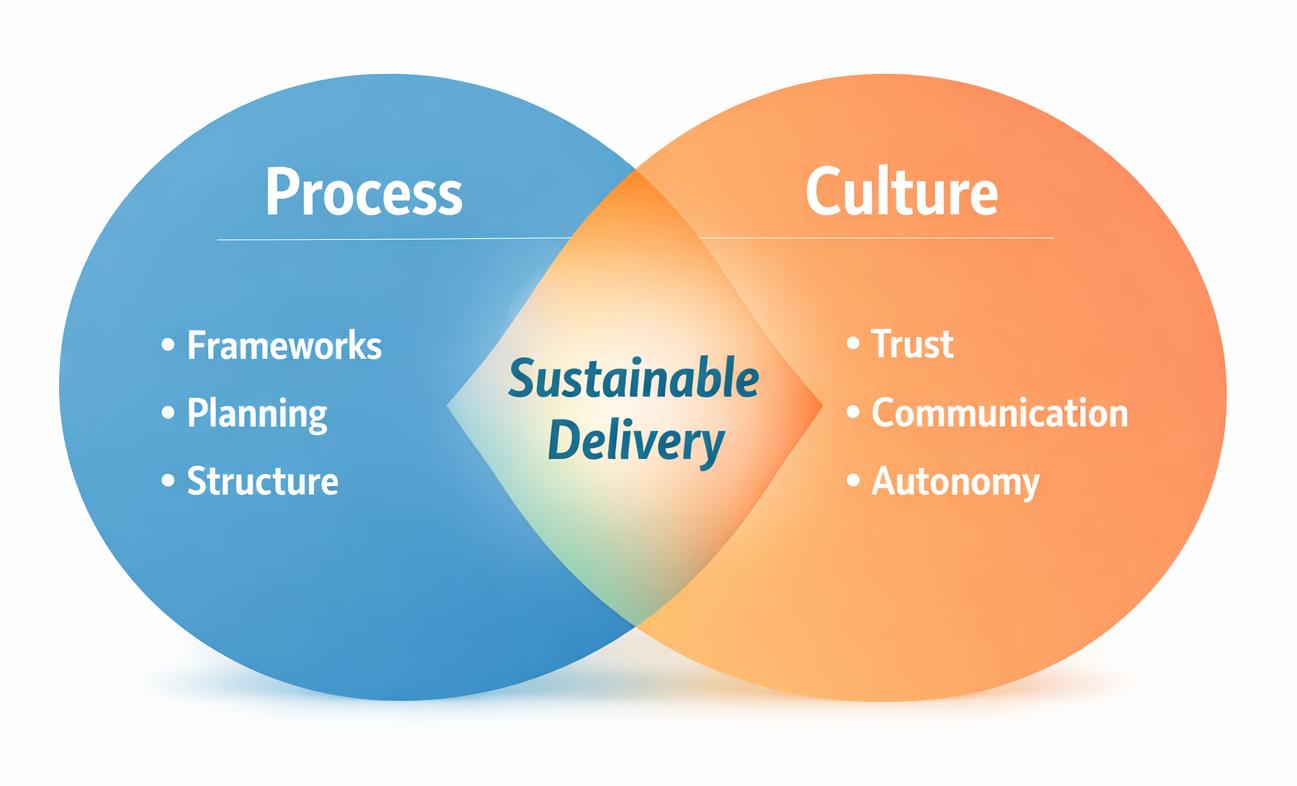
Scandinavian work culture strengthens this model through:
- Low hierarchy
- Open communication
- Psychological safety
Asking questions is encouraged. Admitting uncertainty is accepted. These cultural foundations allow collaboration to scale naturally.
 Process With Flexibility
Most large IT organizations use Agile-inspired ways of working. What matters is not strict adherence to a framework, but thoughtful adaptation.
Common characteristics include:
- Short planning cycles
- Frequent alignment meetings
- Continuous prioritization based on feedback
Frameworks such as Scrum, Kanban, or scaled Agile models are used as tools, not rules.
https://www.atlassian.com/agile
 How Success Is Sustained Over Time
Technology evolves quickly, but successful companies focus on what stays stable.
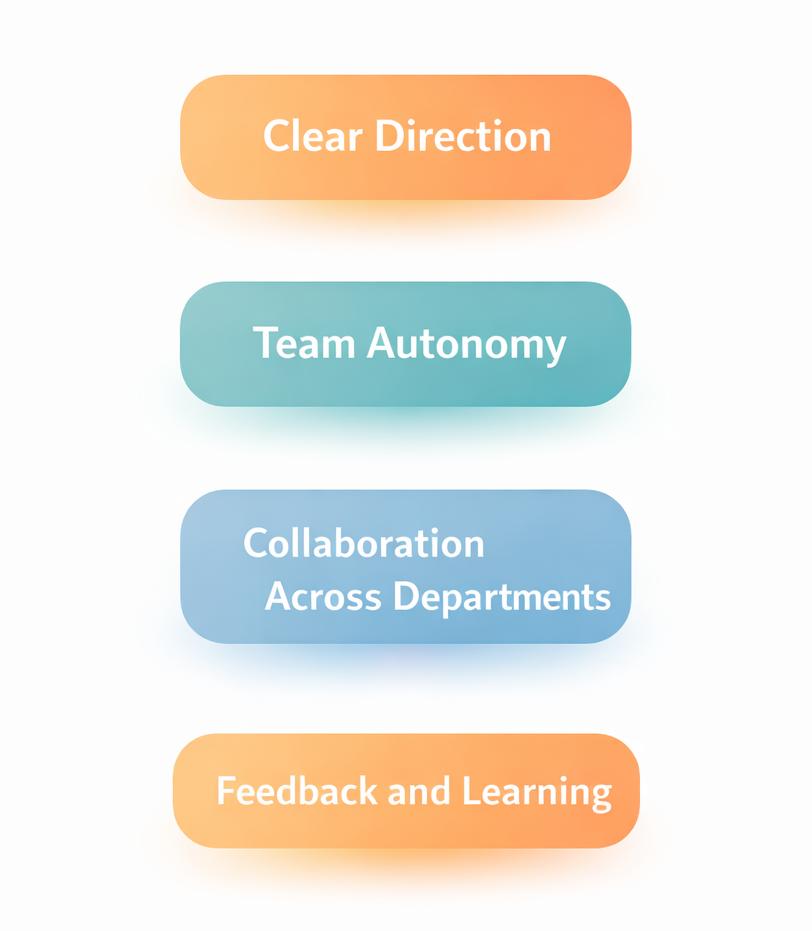
Across high-performing IT organizations, the same patterns appear repeatedly:
- Clear direction combined with team autonomy
- Strong collaboration across departments
- Continuous learning instead of rigid perfection
- Feedback loops that include users, not just systems
When development, quality, business, and operations move together, improvement becomes a natural outcome rather than a forced initiative.
The Human Side of Scale
Large IT systems are complex. What keeps them working is not control, but coordination.
Daily conversations, shared responsibility, and mutual respect allow teams to manage complexity without losing momentum. This is where process meets culture, and where technology becomes truly effective.
Closing Thought
Big IT companies are built on more than code and tools.
They are built on communication, collaboration, and clarity of purpose.
At Funksoft, we believe understanding how great teams work is the first step toward building better software, together.